

Anastomotic leakage after sphincter-sparing surgery in a young woman diagnosed with low rectal cancer - case report
1 Carol Davila University, Department of General Surgery, Bucharest, Romania
2 Colțea Clinical Hospital, Department of General Surgery, Bucharest, Romania
Abstract
Rectal cancer is the third most common site for cancer in the world, with a high morbidity and mortality. The new techniques for the treatment of low rectal cancer have been improved recently, allowing sphincter-sparing surgery to be available for more patients, with an optimal oncological and functional outcome.
The most fundamental advance in rectal cancer surgery was the concept of total mesorectal resection (TME) introduced by Heald in 1982. Association with neoadjuvant radio-chemotherapy determines regression of the disease by “down staging” the tumors and allows for sphincter-sparing surgery to be performed, with low recurrence rate and increased overall survival.
We present the case of 48-year old woman who had low rectal resection with colorectal anastomosis for middle rectal cancer. The patient had a BMI of 29, was hypertensive, had uterine fibroids and underwent neoadjuvant radiotherapy. During the 4th postoperative day the patient developed an anastomotic leakage grade B which was spontaneously closed on the 15th postoperative day. The patient did not manifest fever or any other symptoms. Normal bowel function resumed on the 5th postoperative day. No recurrence was detected at the one-year follow-up.
1. Introduction
Rectal cancer is the third most common site for cancer in men and women worldwide [1]. It is the second cause of mortality for men (11.6%) as well as for women (13%) [2].
Accurate preoperative staging is an important factor for the selection of the patients undergoing neoadjuvant therapy. Whenever is available, highly technological imaging (endorectal ultrasound- ERUS and high-quality computed tomography scans- CT, magnetic resonance imaging- MRI) is recommended to perform a correct and complete tumor staging. Based on this information and considering other comorbidities, age and clinical status, these patients with low rectal cancer can undergo radical surgery with or without preservation of the sphincter function. Presence of the temporary or permanent stoma has a major impact on the quality of life and long-time survival.
The potential advantages of preoperative chemo-radiation come from the fact that it “downstages”, or better said “downsizes” the tumors, so the patients may undergo sphincter-sparing surgery, with decreased recurrence rates, higher survival and prognostic rates. Some patients may have a favorable tumor response, complete or partial pathologic response [3, 4], confirmed by digital rectal examinations or flexible colonoscopy. Postoperative chemotherapy should be indicated in cases with lymph nodes involvement and for the patients with long life expectancy.
The technological progress in the last twenty years has shifted the surgical management from abdominoperineal resection developed by Miles in 1908 [5] to the concept of total mesorectal resection (TME) introduced by Heald [6-8]. The double stapling technique (DST) has facilitated the colo-rectal reconstruction, especially for low rectal tumor resection. The introduction of the circular stapler allows a quicker and easier anastomosis, reduces the operation time, has good oncologic results and lowers the annual number of abdominoperineal resections (APR) compared with low anterior resection (LAR) [9].
The complications associated with radical rectal surgery include anastomotic leaks (5%-17%) [10-14], faecal incontinence (60%-80%) [15-17], urinary dysfunctions (10%-70%) [18-20], sexual dysfunctions (13%-70%) [21, 22], local recurrence (6%-29%) [23, 24].
Anastomotic leakage (AL) is associated with high morbidity, mortality, length of hospitalization, financial costs, risk of early relaparotomy, and also with low survival rate, risk of local recurrence and low quality of life. Therefore, it is essential to identify the prognostic factors that can influence the outcome of AL. Patient’s characteristics such as narrow pelvis, increased visceral fat, uterine leiomyomas or other genital lesions, prostate adenoma or history of low abdominal surgery may be technical challenges. Intraoperative exposure is critical and long instruments and deep retractors are necessary to perform the correct plane dissection and not to lead to vascular accidents. The vascularization of the anastomosis has a very important role. The AL can occur on the poor vascular areas of the stapled line.
Case Report
The 48-year old woman had been referred with rectal bleeding and constipation. She was diagnosed with middle rectal cancer following flexible colonoscopy with biopsy. The endoscopy exam revealed a 3-4 cm in diameter exofitic tumor, with partial stenosis of the rectal lumen.
Preoperative staging included medical history, clinical evaluation (digital rectal examination) and highly accurate magnetic resonance imaging (MRI) exams (Figure 1). Chest X-ray, abdominal ultrasound, serum carcinoembryonic antigen (CEA) and carbohydrate antigen (CA 19-9) level were normal. Haemoglobin level was low before surgery (9.7 g/dl) due to chronic rectal bleeding. No fecal incontinence was confirmed. Other comorbidities included hypertension, uterine leiomyoma (7/9 cm diameter) and BMI = 29 kg/m2 (the body mass index). Preoperative tumor stage was cT3N0M0.
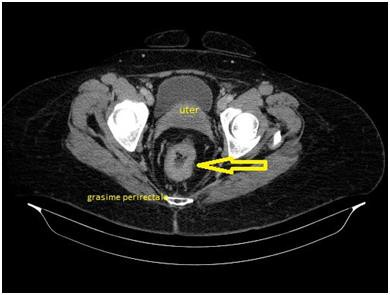
The patient received external beam radiation (EBRT) using conventional fractionation and techniques: 45 Gy in 25 fractions. There was no clinical response after radiotherapy confirmed by digital rectal examination and colonoscopy, which revealed the rectal tumor in 4 cm diameter, with partial stenosis of the rectal lumen. The patient was submitted to radical rectal surgery at 6 weeks after radiotherapy. The patient has given the consent for rectal resection with colorectal anastomosis, but not for ileostomy. Low anterior rectal resection (LAR) with total mesorectal excision (TME) was performed. The colorectal anastomosis was done by using circular double stapling technique (Figures 2, 3, 4).
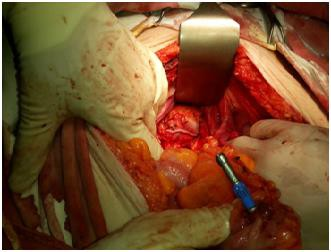
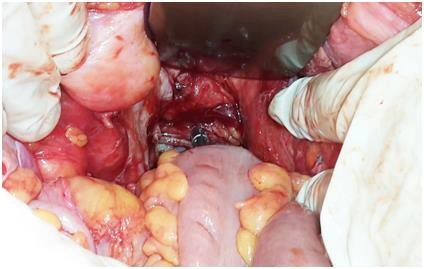
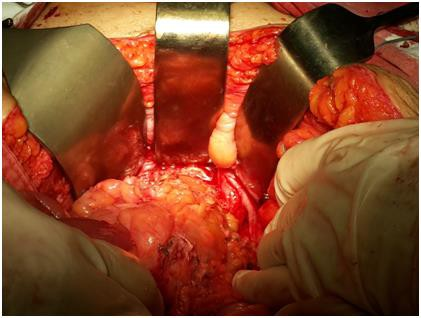
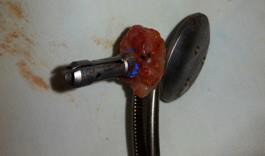
The integrity of the anastomosis was checked by transanal methylene blue instillation. Protective ileostomy was not performed. No metastasis was found. Because of the increased visceral fat, post radiotherapy fibrosis around the rectum and the presence of the uterine fibroids were considered factors that did not allow the surgeon to have a good visualization of the dissection plane, he decided to perform a subtotal hysterectomy. With the pelvis wide open, he could now resects the rectum following the Heald’s “Holy Plane”. The extracted specimen was a cylindrical shaped tube, with intact mesorectal fascia (Figures 5-7). Two drain tubes were placed in pelvis and near the anastomosis. After the circular stapled anastomosis is complete, the proximal and distal specimens (the “donuts”) are examined by the surgeon to check for macroscopic residual tumor (Figures 8, 9, 10).
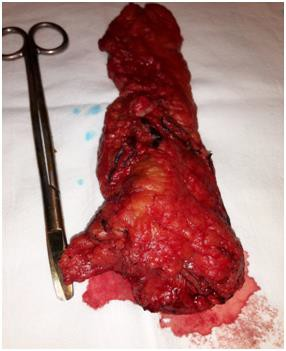
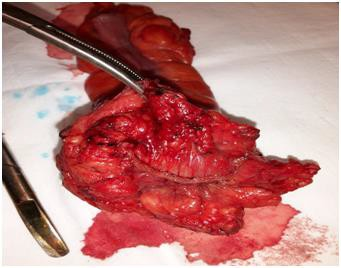



The specimen was examined by the pathologist. The histology included moderately- differentiated (G2) adenocarcinoma, with no radial or distal infiltration and no lymphovascular or perineural invasion (Figure 11). The number of lymph nodes identified was 22 and none contained metastases (N0). The pathology stage was pT3N0M0.

The patient developed anastomotic leakage during the 4th postoperative day, with an intestinal liquid flow of 10 ml per day. According to the International Study Group of Rectal Cancer (ISGRC) we considered the AL as grade B. The bowel function was normal starting with the 5th postoperative day. The blood test was normal. Pelvic ultrasound revealed a minimum amount of liquid in Douglas’s pouch which was resorbed progressively. The patient did not develop fever or other clinical symptoms.
The systemic treatment included antibiotics, anticoagulants, antalgics and anti-inflammatory drugs. The drainage flow was low, up to 10-15 ml per day, and it spontaneous stopped in the 15th postoperative day.
The postoperative follow up after discharge from the hospital revealed no other complication, with normal serum CEA and CA 19-9 levels, normal daily bowel function, and normal urinary and sexual function. No local recurrence was found at 1-year follow-up.
The factors that can be involved in this particular case of anastomotic leakage included the tumor characteristics (stage T3, moderate differentiated grade adenocarcinoma), patients related factors (BMI=29, hypertension), neoadjuvant radiotherapy and intraoperative local conditions (increased pelvic fat, uterine fibroids, post radiotherapy fibrosis).
2. Discussion
The standard treatment for distal rectal cancer is abdominoperineal resection (APR), low anterior resection (LAR) with colorectal anastomosis or ultralow anterior rectal resection (ULAR) with coloanal anastomosis, transanal local resection.
Surgical dissection in the embryologic avascular the “Holy Plane” consists in anatomically removing rectal cancers within the intact mesorectal compartment between the parietal pelvic fascia and the visceral mesorectal fascia [25].
The total mesorectal resection (TME) is now the gold-standard of the rectal cancer surgery.
Local excision is indicated for small, very early stage tumors or for patients with significant comorbid conditions that make a more radical surgical unacceptable [26].
Neoadjuvant radio-chemotherapy has been proven in reducing the rate of local recurrence, comparing with the postoperative treatment [18, 19]. It also may reduce the size of the tumor and therefore allow sphincter sparing surgery.
Despite the surgical and technological advances, anastomotic leakage (AL) is one of the most important complication after low rectal cancer surgery, with higher morbidity and mortality rates [20]. The presence of AL raises the re-laparotomy rate up to 5.4% [21]. The studies have reported that AL rate ranges from 3% to 19% [27].
The International Study Group of Rectal Cancer (ISGRC) [21] defined anastomotic leakage (AL) as the defect in the anastomotic site integrity, creating a communication between the intra- and extraluminal compartments. The group suggested three grades of AL severity. Grade A leakage is asymptomatic/ radiologic leakage and it requires no change in therapeutic management. Grade B leakage requires non-surgical therapeutic intervention like antibiotics, transanal, endoscopic drainage but no relaparotomy. Grade C requires relaparotomy.
Some reports have shown that overall complication rate including anastomotic leakage is not increased after neoadjuvant therapy [25, 26]. Other studies have shown that the neoadjuvant radio-chemotherapy is an independent risk factor for symptomatic anastomotic leakage [27]. Studies have showed that the complication rates after stapled anastomosis are similar or even lower with the hand-sewed anastomosis [28, 29].
The presence of AL remains a real challenge in rectal cancer surgical management. There are preoperative factors, intraoperative factors and postoperative factors that can influence the postoperative evolution and the prognosis of the patients with distal rectal cancer. The continuous progress of technology, the good knowledge of the anatomy and embryology of the rectum will lead to better functional and oncological outcome and will provide good quality of life and increased overall survival [30].
3. Conclusions
The patient with low rectal cancer, once almost constrained to abdominoperineal resection with permanent colostomy, now has the benefit of anal sphincter preservation, with normal defecation function, increased quality of life and improved survival.
The role of multimodality treatment is to improve local control rates and to allow better functional outcomes in highly selected patients with low rectal cancer
The functional outcome is influenced by multiple factors, including the patient, the histopathological characteristics of the tumor, the neoadjuvant therapy and the surgical technique.
Acknowledgments
Acknowledgement” This work received financial support through the project entitled "CERO – Career profile: Romanian Researcher", grant number POSDRU/159/1.5/S/ 135760, cofinanced by the European Social Fund for Sectoral Operational Programme Human Resources Development 2007-2013”.
References
- Ferlay J, Soerjomataram I, Dikshit R, Eser S, Mathers C, Rebelo M, Parkin DM, Forman D, Bray F. Cancer incidence and mortality worldwide: Sources, methods and major patterns in GLOBOCAN 2012. Int. J. Cancer 2015; 136(5): E359–86. PMID: 25220842 https://doi.org/10.1002/ijc.29210
- Ferlay J, Steliarova-Foucher E, Lortet-Tieulent J, Rosso S, Coebergh JW, Comber H, Forman D, Bray F. Cancer incidence and mortality patterns in Europe: estimates for 40 countries in 2012. Eur J Cancer. 2013; 49(6): 1374–403. PMID: 23485231 https://doi.org/10.1016/j.ejca.2012.12.027
- Rosenberg R, Nekarda H, Zimmermann F, Becker K, Lordick F, Hofler H, Molls M, Siewert JR. Histopathological response after preoperative radiochemotherapy in rectal carcinoma is associated with improved overall survival. J Surg Oncol. 2008; 97(1): 8–13. PMID: 18085619 https://doi.org/10.1002/jso.20844
- Watanabe T, Itabashi M, Shimada Y, Tanaka S, Ito Y, Ajioka Y, Hamaguchi T, Hyodo I, Igarashi M, Ishida H, Ishihara S, Ishiguro M, Kanemitsu Y, Kokudo N, Muro K, Ochiai A, Oguchi M, Ohkura Y, Saito Y, Sakai Y, Ueno H, Yoshino T, Boku N, Fujimori T, Koinuma N, Morita T, Nishimura G, Sakata Y, Takahashi K, Tsuruta O, Yamaguchi T, Yoshida M, Yamaguchi N, Kotake K, Sugihara K; Japanese Society for Cancer of the Colon and Rectum. Japanese Society for Cancer of the Colon and Rectum (JSCCR) Guidelines 2014 for treatment of colorectal cancer. Int J Clin Oncol. 2015; 20(2): 207-39. PMID: 25782566 https://doi.org/10.1007/s10147-015-0801-z
- Fokas E, Liersch T, Fietkau R, Hohenberger W, Beissbarth T, Hess C, Becker H, Ghadimi M, Mrak K, Merkel S, Raab HR, Sauer R, Wittekind C, Rödel C. Tumor regression grading after preoperative chemoradiotherapy for locally advanced rectal carcinoma revisited: updated results of the CAO/ARO/AIO-94 trial. J Clin Oncol. 2014; 32(15): 1554–62. PMID: 24752056 https://doi.org/10.1200/JCO.2013.54.3769
- Dangi-Garimella S. Adjuvant pre- or post-operative chemotherapy does not improve survival in rectal cancer. Am J Manag Care. 2014; 20(2): E8. PMID: 25618385
- Heald RJ, Ryall RD. Recurrence and survival after total mesorectal excision for rectal cancer. Lancet 1986; 1: 1479–1482. PMID: 2425199 https://doi.org/10.1016/S0140-6736(86)91510-2
- Morino M, Risio M, Bach S, Beets-Tan R, Bujko K, Panis Y, Quirke P, Rembacken B, Rullier E, Saito Y, Young-Fadok T, Allaix ME; European Association for Endoscopic Surgery; European Society of Coloproctology. Early rectal cancer: the European Association for Endoscopic Surgery (EAES) clinical consensus conference. Surg Endosc. 2015; 29(4): 755-73. PMID: 25609317 https://doi.org/10.1007/s00464-015-4067-3
- Heald RJ. Towards fewer colostomies--the impact of circular stapling devices on the surgery of rectal cancer in a district hospital. Br J Surg. 1980; 67(3): 198-200. PMID: 7362961 https://doi.org/10.1002/bjs.1800670311
- Heald RJ, Moran BJ, Ryall RD, Sexton R, MacFarlane JK. Rectal cancer: the Basingstoke experience of total mesorectal excision, 1978- 1997. Arch Surg. 1998; 133(8): 894-9. PMID: 9711965 https://doi.org/10.1001/archsurg.133.8.894
- Piso P, Dahlke MH, Mirena P, Schmidt U, Aselmann H, Schlitt HJ, Raab R, Klempnauer J. Total mesorectal excision for middle and lower rectal cancer: a single institution experience with 337 consecutive patients. J Surg Oncol. 2004; 86(3):115-21. PMID: 15170648 https://doi.org/10.1002/jso.20062
- Lundby L, Krogh K, Jensen VJ, Gandrup P, Qvist N, Overgaard J, Laurberg S. Long-term anorectal dysfunction after postoperative radiotherapy for rectal cancer. Dis Colon Rectum. 2005; 48(7): 1343-52. PMID: 15933797 https://doi.org/10.1007/s10350-005-0049-1
- Wallner C, Lange MM, Bonsing BA, Maas CP, Wallace CN, Dabhoiwala NF, Rutten HJ, Lamers WH, Deruiter MC, van de Velde CJ. Cooperative Clinical Investigators of the Dutch Total Mesorectal Excision Trial. Causes of fecal and urinary incontinence after total mesorectal excision for rectal cancer based on cadaveric surgery: a study from the Cooperative Clinical Investigators of the Dutch total mesorectal excision trial. J Clin Oncol. 2008; 26(27): 4466- 72. PMID: 18802159 https://doi.org/10.1200/JCO.2008.17.3062
- Lange MM, Maas CP, Marijnen CA, Wiggers T, Rutten HJ, Kranenbarg EK, van de Velde CJ; Cooperative Clinical Investigators of the Dutch Total Mesorectal Excision Trial. Br J Surg. 2008; 95(8): 1020–28. PMID: 18563786 https://doi.org/10.1002/bjs.6126
- Mannaerts GH, Schijven MP, Hendrikx A, Martijn H, Rutten HJ, Wiggers T. Urologic and sexual morbidity following multimodality treatment for locally advanced primary and locally recurrent rectal cancer. Eur J Surg Oncol. 2001; 27(3): 265– 72. PMID: 11373103 https://doi.org/10.1053/ejso.2000.1099
- Saito S, Fujita S, Mizusawa J, Kanemitsu Y, Saito N, Kinugasa Y, Akazai Y, Ota M, Ohue M, Komori K, Shiozawa M, Yamaguchi T, Akasu T, Moriya Y; Colorectal Cancer Study Group of Japan Clinical Oncology Group. Male sexual dysfunction after rectal cancer surgery: Results of a randomized trial comparing mesorectal excision with and without lateral lymph node dissection for patients with lowerrectal cancer: Japan Clinical Oncology Group Study JCOG0212. Eur J Surg Oncol. 2016; 42(12): 1851-58. PMID: 27519616 https://doi.org/10.1016/j.ejso.2016.07.010
- Sauer R, Liersch T, Merkel S, Fietkau R, Hohenberger W, Hess C, Becker H, Raab HR, Villanueva MT, Witzigmann H, Wittekind C, Beissbarth T, Rödel C. Preoperative versus postoperative chemoradiotherapy for locally advanced rectal cancer: Results of the German CAO/ARO/AIO-94 randomized phase III trial after a median follow-up of 11 years. J Clin Oncol. 30(16): 1926–33. PMID: 25609317 https://doi.org/10.1200/JCO.2011.40.1836
- Bökkerink GM, Buijs EF, de Ruijter W, Rosman C, Sietses C, Strobel R, Heisterkamp J, Nagtegaal ID, Bremers AJ, de Wilt JH. Improved quality of care for patients undergoing an abdominoperineal excision for rectal cancer. Eur J Surg Oncol. 2015; 41(2): 201-7. PMID: 25572974 https://doi.org/10.1016/j.ejso.2014.11.003
- Sauer R, Becker H, Hohenberger W, Rödel C, Wittekind C, Fietkau R, Martus P, Tschmelitsch J, Hager E, Hess CF, Karstens JH, Liersch T, Schmidberger H, Raab R, German Rectal Cancer Study Group: Preoperative versus postoperative chemoradiotherapy for rectal cancer. N Engl J Med. 2004; 351(17): 1731-40. PMID: 15496622 https://doi.org/10.1056/NEJMoa040694
- Debove C, Maggiori L, Chau A, Kanso F, Ferron M, Panis Y. Risk factors for circumferential R1 resection after neoadjuvant radiochemotherapy and laparoscopic total mesorectal excision: a study in 233 consecutive patients with mid or low rectal cancer. Int J Colorectal Dis. 2015; 30(2): 197-203. PMID: 25466419 https://doi.org/10.1007/s00384- 014-2080-y
- Compton CC. Pathologic prognostic factors in the recurrence of rectal cancer. Clin Colorectal Cancer. 2002; 2(3): 149–60. PMID: 12482331 https://doi.org/10.3816/CCC.2002.n.020
- Rahbari NN, Weitz J, Hohenberger W, Heald RJ, Moran B, Ulrich A, Holm T, Wong WD, Tiret E, Moriya Y, Laurberg S, den Dulk M, van de Velde C, Büchler MW. Definition and grading of anastomotic leakage following anterior resection of the rectum: a proposal by the International Study Group of Rectal Cancer. Surgery 147(3): 339-51. PubMed: 20004450 https://doi.org/10.1016/j.surg.2009.10.012
- Kingham TP, Pachter HL. Colonic anastomotic leak: risk factors, diagnosis, and treatment. J Am Coll Surg. 2009; 208(2): 269-278 PMID: 19228539 https://doi.org/10.1016/j.jamcollsurg.2008.10.015
- Kang CY, Halabi WJ, Chaudhry OO, Nguyen V, Pigazzi A, Carmichael JC, Mills S, Stamos MJ. Risk factors for anastomotic leakage after anterior resection for rectal cancer. JAMA Surg 2013; 148(1): 65-71. PMID: 22986932 https://doi.org/10.1001/2013.jamasurg.2
- Petrelli F, Coinu A, Lonati V, Barni S. A systematic review and meta-analysis of adjuvant chemotherapy after neoadjuvant treatment and surgery for rectal cancer. Int J Colorectal Dis. 2015; 30(4): 447-57. PMID: 25433820 https://doi.org/10.1007/s00384-014-2082-9
- Maas M, Nelemans PJ, Valentini V, Crane CH, Capirci C, Rödel C, Nash GM, Kuo LJ, Glynne- Jones R, García-Aguilar J, Suárez J, Calvo FA, Pucciarelli S, Biondo S, Theodoropoulos G, Lambregts DM, Beets-Tan RG, Beets GL. Adjuvant chemotherapy in rectal cancer: defining subgroups who may benefit after neoadjuvant chemoradiation and resection: a pooled analysis of 3,313 patients. Int J Cancer. 2015; 137(1): 212-20. PMID: 25418551 https://doi.org/10.1002/ijc.29355
- Bannon JP, Marks GJ, Mohiuddin M, et al. Radical and local excisional methods of sphincter-sparing surgery after high-dose radiation for cancer of the distal 3 cm of the rectum. Ann Surg Oncol. 1995; 2(3): 221–27. PMID: 7641018 https://doi.org/10.1007/BF02307027
- P. Matthiessen, O. Hallbök, M. Andersson, J. Rutegård, R. Sjödahl. Risk factors for anastomotic leakage after anterior resection of the rectum. Colorectal Dis. 2004 Nov; 6(6): 462–9. PMID: 15521937 https://doi.org/10.1111/j.1463-1318.2004.00657.x
- Goulder F. Bowel anastomoses: The theory, the practice and the evidence base. World Journal of Gastrointestinal Surgery. 2012; 4(9): 208-13. PMID: 23293735 https://doi.org/10.4240/wjgs.v4.i9.208
- Lovegrove RE, Constantinides VA, Heriot AG, Athanasiou T, Darzi A, Remzi FH, Nicholls RJ, Fazio VW, Tekkis PP. A Comparison of Hand- Sewn Versus Stapled Ileal Pouch Anal Anastomosis (IPAA) Following Proctocolectomy: A Meta-Analysis of 4183 Patients. Ann Surg. 2006; 244(1): 18-26. PMID: 16794385 https://doi.org/10.1097/01.sla.0000225031.15405.a3
