

A prospective study of union rates of midshaft clavicle fractures with plate osteosynthesis
1 SENIOR RESIDENT, DEPARTMENT OF ORTHOPAEDICS, GOVERNMENT MEDICAL COLLAGE, KADAPA
2 ASSISTANT PROFESSOR, DEPARTMENT OF BIOCHEMISTRY, OSMANIA MEDICAL COLLEGE/NILOUFER HOSPITAL, LAKIDIKAPOOL, HYDERABAD
Abstract
Introduction. Internal fixation is the current treatment approach for displaced clavicle fractures, which ensures firm immobilization and pain relief, thus preventing complications such as non-union, shortening and deformity. Aims. The aim of the study is to investigate the union rates with plate osteosynthesis, in order to be able to compare the clinical results obtained by several treatment modalities, in terms of movements, pain relief, return to normal activities and work. Materials and Methods. This is a prospective study on 30 patients with middle third clavicle fractures treated with plate osteosynthesis between December 2018 and October 2020, at Santiram Medical College and General Hospital, Nandyal. The study included patients older than 18 years. Results. The road accident was the most common cause of this fracture in our study, 70% being males and 63% with a right-sided injury. All patients were operated on within one week of the injury. Robinson Type-2B1 was the most commonly observed in our study and was approximately 53%. Twenty patients (66%) were treated with a Recon plate, nine patients (30%) were treated with an anatomical locking compression plate, one patient (3%) was treated with 1/3 tubular plate. All patients were immobilized in an arm sling, allowing a passive range of movements for 2-3 weeks. The duration of hospitalization was six to seven days, while the duration of the union varied from 8-14 weeks. Evaluation of functional outcome was based on Constant-Murley score, showing excellent results in 20 patients. Conclusions. In displaced midshaft clavicle fractures, open reduction with internal fixation has led to good union rates with excellent functional outcomes.
Introduction
The clavicle is a bone connection between the thorax and the shoulder girdle that helps to move the shoulder girdle. Because of their subcutaneous location, clavicle fractures are the most common traumatic injuries around the shoulder girdle. It can be caused by either too much or too little energy. The clavicle is larger medially at its sternal articulation and markedly narrower at its lateral third when viewed in the coronal plane. However, when seen axially, the three-dimensional structure becomes more visible. With the medial half convex forward and the lateral half concave forward, the clavicle forms a mild 'S' shape. The name comes from a comparison of its shape to the musical symbol clavicula [1,2]. According to recent studies, subgroups of individuals with clavicular fractures had a higher rate of nonunion and shoulder impairment. For the reasons described above, these fractures should be seen as a spectrum of injuries with varying functional outcomes, each requiring thorough evaluation and personalized treatment. Because the published research are mostly retrospective case series documenting diverse treatment techniques, they have low quality and insufficient evidence. What kind of injuries require surgical intervention is still a bit of a mystery [3,4].
Clavicle fractures represented 2.6% of all fractures and 44% of those in the shoulder girdle. Nearly 2-5% of all fractures in adults and 10-15% in children involve the clavicle. Middle third fractures are seen in 69.2% of patients, lateral-end in 28%, and medial-end in 2.8% of patients [2-4]. Older studies suggested that a displaced fracture of the clavicle's shaft had an inherently good prognosis when treated nonoperatively. Clavicle fractures were commonly seen in youthful, dynamic people, particularly the individuals who participate in exercises or sports where falls (bicycling, cruisers) or vicious crashes (football, hockey) are regular, representing roughly 2.6% all things considered. In contrast to most fractures, Robinson reported in an epidemiological study that the annual incidence in males was highest in patients under 20 years, decreasing with each subsequent age cohort [5,6].
The female rate was more consistent, with a surge in the younger generation (sports, car accidents) and a plateau in the older generation (osteoporotic fractures from simple falls). The bulk of clavicle fractures (80 percent to 85 percent) occur in the mid-shaft of the bone, where the shoulder's usual compressive pressures and the narrow cross-section of the bone combine to cause bony failure. Distal third fractures are the next most prevalent form (15 percent to 20%), and while they can occur due to a similar mechanism of damage as mid-shaft fractures, they are more likely to occur in older people due to simple falls. The most common type of fracture is a medial third fracture (0 percent to 5 percent). Fractures were prevalent among males in their fifties, and the most common mode of injury was a fall. Displaced midshaft clavicle fractures are typical and were commonly treated non operatively. Nonunion and mal-union have been linked to nonoperative treatment of these fractures with crucial shortening. Complications include neurological issues, loss of shoulder movement, and visible hardware beneath the skin, which is unattractive cosmetically. Nonunion emphasizes the importance of precise reduction and firm fixation in providing rapid pain relief and functional recovery in fresh clavicle fractures to avoid problems such as mal-union. The early treatment of these clavicle fractures improves the patient's comfort and shoulder mobility. Plates or intramedullary implants such as TENS or Kirschner wire are used successfully in the surgical treatment of midshaft clavicle fractures. Internal fixation with plating and open reduction result in firm fixation, early functional recovery, and minimal nonunion and mal-union rates [5,6].
Although non-surgical management may be optimal for many fractures, good outcomes of non-surgically treated fractures are not universal. Surgically treated fractures had good functional and radiological outcomes. Anatomically pre-contoured implants have the expected focal points of not bending further, having a lower profile causing less soft tissue problems while holding the stronger plates' mechanical strength [6,7]. The purpose of the study is to prospectively analyze the functional outcome of middle third displaced clavicular shaft fractures treated by open reduction and internal fixation with plate osteosynthesis.
Materials and Methods
This is a prospective study conducted in Santhiram Medical College and General Hospital, Nandyal, from December 2018 to October 2020. Ethics Committee clearance was obtained before starting the study. The study's purpose was explained to the subjects in their dialect, and informed written consent was obtained from them. All 30 patients aged between 18 to 60 years diagnosed with displaced midshaft clavicular fractures.
Inclusion Criteria: >18 years old and under 60 years old. Fractures with displacement >2 cm, shortening >2 cm, segmental fractures, open fractures, and impending complicated fractures with soft tissue compromise, as well as concomitant injuries.
Exclusion Criteria: Un-displaced or minimally displaced fractures, any medical contraindication to
surgery
(heart diseases, renal failure, or active chemotherapy).
The Constant-Murley score evaluates pain, the ability to perform daily living activities, shoulder motion, and abduction strength. Additionally, the score is normalized to age. It is the only measurement tool that was subjected to validation in its original publication. The Constant-Murley shoulder score (also known as the Constant score) is a 100-point scoring system (100 points representing the best score) in which 35 points are obtained from the patient's reported pain and function, and the remaining 65 points are allocated to the assessment of R.O.M. and strength. The combination of patient-reported, clinician-reported, and performance outcome measures into a single numerical score makes it relatively unique, bestowing a major strength compared to the other outcome measures commonly used. On the other hand, some investigators believe that patient- and observer-based measurements should not be combined into a single score and are best reported separately. The Constant score has been found to be affected by both patient age and sex, where the score tends to decrease beginning at age 50 for men and age 30 for women. Age- and sex-matched normative data are available for the Constant score and have permitted the development of age- and sex-adjusted Constant score. The M.C.I.D. for the Constant score was recently reported as 10.4 in the rotator cuff tear population and 15 for patients with general subacromial pain.
The main advantage of the Constant score is its popularity, which allows it to be used to compare different studies. Despite its popularity, this score has had a number of criticisms, including its merely "fair" reliability. The objective measurements (e.g., strength and R.O.M. components), which account for 65 percent of the score, are most likely to blame for the lower dependability. 82 measurement techniques were not detailed in a standardized fashion in the initial publication, which led to the following release of instructions on proper approaches for administering the instrument, with a focus on the strength measurement component. The Constant score is also more challenging to administer than patient-recorded outcome measures since a major amount of the score is obtained from observer-based measurement. If patients are unable to return for a follow-up assessment, data collecting can be used instead. There have also been floor impacts for trauma patients and ceiling effects for those with instability. Because of the distinct clinical presentation of shoulder instability relative to other shoulder diseases, ceiling effects are common with most instability-specific scores.
The Constant score has only one pain scale, which is likely an insufficient representation of a patient's discomfort because individuals often experience varying degrees of pain based on their activities. The use of the unaffected (i.e., contralateral) shoulder as a reference to give an "individual relative Constant score" has been suggested as a way to improve the Constant score's accuracy; however, this method would be difficult for patients with bilateral shoulder problems. Due to some of these potential problems with the Constant score, at least two authors have advised against its use in randomized controlled trials [3,4].
Data was entered in Microsoft excel and analysis was performed using SPSS version 20. Descriptive statistical analysis was done. Results on continuous measurements are presented as Mean & Standard Deviation. Results on categorical measurements are presented as Percentages. Significance is assessed at 5 % level of significance. Student t test (independent, two tailed) has been used to find out the significance of study parameters on a continuous scale between two groups. Chi square test is used to find out the significance of study parameters on a categorical scale between two groups.
Age Frequency Percentage
20-25 8 26.7
26-30 10 33.3
31-35 9 30.0
36-40 1 3.3
41-45 2 6.7
Gender
Male 21 70
Female 9 30
Mode of injury
Accidental fall 5 16.67
RTA 25 83.33
Mechanism of Injury
F.O.O.S.H. 22 73.33
Direct injury 8 26.67
Side of injury
Right 19 63.33
Left 11 36.67
Robinson classification
2b1 16 53.3
2b2 14 46.7
Table 1. Demographic distribution of study participants
| Table 3. Distribution of type of fracture based on the mode and | |||
|---|---|---|---|
| mechanism of injury (N=30) | |||
| Mode of Injury | 2b1 (n=16) | 2b2 (n=14) | |
| Accidental fall | 4 (25) | 1 (7.1) | |
| RTA | 12 (75) | 13 (92.9) | |
| Mechanism of Injury | |||
| FOOSH | 11 (68.8) | 11 (78.6) | |
| Direct Injury | 5 (31.2) | 3 (21.4) |
Results
The overall mean age of the participants was 29±5.9 years. The majority of them were 26-30 years (33.3%) in the age group, followed by 31-35 years (30%). Male preponderance (70%) was seen in our study. Around 83.33% of the study participants had R.T.A., followed by 16.67% fall from height. Around 73.33% of the study participants had F.O.O.S.H., followed by 26.67% who had a direct injury. Our study participants had 37% with the left side, and 63% had right side injury. In our study, around 47% only had 2b2 type, and 53% had 2b1 type.
In our study, around 67% had a recon plate, followed by 30% L.C.P.
Complication Frequency Percentage
Infection 1 3.33
Plate loosening - -
Plate breakage - -
Hardware irritation 4 13.3
Malunion - -
Delayed union - -
Restriction of shoulder function - - In our study, around 7% had restriction of shoulder function, followed by 6.67% had hardware irritation, another 3.3% had an infection.
Mode of Injury 2b1 (n=16) 2b2 (n=14)
Accidental fall 4 (25) 1 (7.1)
RTA 12 (75) 13 (92.9) Mechanism of Injury
FOOSH 11 (68.8) 11 (78.6)
Direct Injury 5 (31.2) 3 (21.4) In 75% of 2b1 fractures and 92.9% of 2b2 fractures are attributed to road traffic accidents. In 31.2% of 2b1 fractures and 21.4% of 2b2 fractures are attributed to direct injury.
The average blood loss during the surgery was less than 100 ml.
Time of union n (%) Eight weeks 7 (23) 10 9 (30) 12 10 (33) >12 weeks 4 (13.3) Return to work N (%) 8-10 weeks 3 [10] 11-12 weeks 13 (43) 13-14 weeks 9 (30) 15-16 weeks 5 (16.7) Out of 30 cases, 7 cases united in 8 weeks, 9 cases united by ten weeks, 10 cases by 12 weeks, and 4 cases alone for more than 12 weeks. Out of 30 cases, 3 cases returned to work by 8-10 weeks, 13 cases united by 11-12 weeks, 9 cases by 13-14 weeks, and 5 cases alone by 15-16 weeks.
Outcome Rating Frequency Percentage Excellent Above 94 units
30 100 The overall mean constant score of our study participants were 94.80±0.99 (94 to 96).
Study Year of
study
Predominance of
plate Percentage Naveen et al.
[8] 2017 Dynamic compression plate 50% Mishra et al.
[9] 2017 Anatomical locking
compression plate 47% Dhakad et al.
[10] 2016 3.5 mm L.C.P. anterosuperior plate 52% Our study 2020 Recon plate 67% pre-operative immediate post-operative 4 weeks 6 weeks 8 weeks 8 weeks functional outcome functional outcome
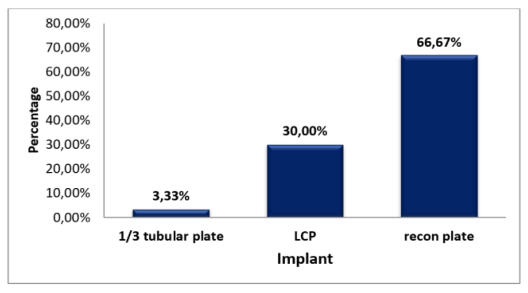
Table 2. Distribution of study participants according to complications (N=30)
| Table 1. Demographic distribution of study participants | |||
|---|---|---|---|
| Age | Frequency | Percentage | |
| 20-25 | 8 | 26.7 | |
| 26-30 | 10 | 33.3 | |
| 31-35 | 9 | 30.0 | |
| 36-40 | 1 | 3.3 | |
| 41-45 | 2 | 6.7 | |
| Gender | |||
| Male | 21 | 70 | |
| Female | 9 | 30 | |
| Mode of injury | |||
| Accidental fall | 5 | 16.67 | |
| RTA | 25 | 83.33 | |
| Mechanism of Injury | |||
| F.O.O.S.H. | 22 | 73.33 | |
| Direct injury | 8 | 26.67 | |
| Side of injury | |||
| Right | 19 | 63.33 | |
| Left | 11 | 36.67 | |
| Robinson classification | |||
| 2b1 | 16 | 53.3 | |
| 2b2 | 14 | 46.7 |
Table 3. Distribution of type of fracture based on the mode and mechanism of injury (N=30)
| Table 3. Distribution of type of fracture based on the mode and | |||
|---|---|---|---|
| mechanism of injury (N=30) | |||
| Mode of Injury | 2b1 (n=16) | 2b2 (n=14) | |
| Accidental fall | 4 (25) | 1 (7.1) | |
| RTA | 12 (75) | 13 (92.9) | |
| Mechanism of Injury | |||
| FOOSH | 11 (68.8) | 11 (78.6) | |
| Direct Injury | 5 (31.2) | 3 (21.4) |
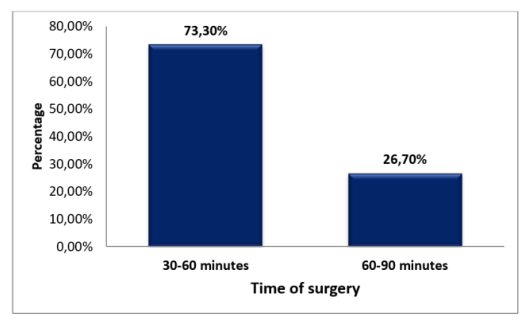
Table 4. Distribution of subjects based on the time of union and return to work (N=30)
| Table 5. Constant Score- Overall rating (N=30) | |||
|---|---|---|---|
| Outcome | Rating | Frequency | Percentage |
| Excellent | Above 94 units | 30 | 100 |
Table 5. Constant Score- Overall rating (N=30)
| Table 6. Comparison of plating with other studies | ||||
|---|---|---|---|---|
| Study | Yearof study | Predominance of plate | Percentage | |
| Naveen et al. [8] | 2017 | Dynamic compression plate | 50% | |
| Mishra et al. [9] | 2017 | Anatomical locking compression plate | 47% | |
| Dhakad et al. [10] | 2016 | 3.5 mm L.C.P. anterosuperior plate | 52% | |
| Our study | 2020 | Recon plate | 67% |
Table 6. Comparison of plating with other studies
| Table 6. Comparison of plating with other studies | ||||
|---|---|---|---|---|
| Study | Yearof study | Predominance of plate | Percentage | |
| Naveen et al. [8] | 2017 | Dynamic compression plate | 50% | |
| Mishra et al. [9] | 2017 | Anatomical locking compression plate | 47% | |
| Dhakad et al. [10] | 2016 | 3.5 mm L.C.P. anterosuperior plate | 52% | |
| Our study | 2020 | Recon plate | 67% |
Discussion
Usually, all the clavicle fractures are treated conservatively. Dedeoglu et al. [4], Nordqvist et al. [5], and Robinson et al. [6] did a study to compare the results of conservative treatment. All of them had found poor results following conservative management of displaced middle-third clavicle fracture. There comes a specific indication like displacement, either with or without comminuted middle third clavicle fracture (Robinson Type- 2b1, 2b2).
The patients treated with quick, rigid fixation of clavicle fractures shares a high constant Murley score postoperatively. Simultaneously, reporting of early pain resolution, return to activity earlier, and higher patient satisfaction rates. Plating had the advantage of maintaining the length mostly in comminuted fractures. There are low rates of implant failure and migration. The mean age of the participants in the study was 29±5.9 years. Most of them were 26-30 years (33.3%) in the age group, followed by 31-35 years (30%). The mean age was comparable with Kakkar et al. [7], Mishra et al. [9] and Karthi et al. [11] results as 32 yrs, 29 yrs and 30 years of mean age. Middle third fractures are more common and comprise 2-5% of all fractures. This again shows clavicle fracture is more common among young active, working-age individuals.
Male preponderance (70%) was seen in our study. Male preponderance was almost similar to other studies as of Kakkar et al. [7] Mishra et al. [9] and Karthi et al. [11] studies. This result can be substantiated by the frequency of fractures more among young adults of working age (Table-1).
Around 83.33% of the study participants had R.T.A., followed by 16.67% fall from height. Kakkar et al. [7] and Naveen et al. [8] studies fetched similar results as that of our study, with a common mode of injury being road traffic accident, but Bhardwaj et al. [12] in his study had mentioned the fall as the most common mode of injury (Table-3).
Younger adults, mostly males, are most commonly sustaining clavicle fractures from road transport accidents than females, whereas older patients more often sustain clavicle fractures due to falls.
Around 73.33% of the study participants had F.O.O.S.H., followed by 26.67% who had a direct injury. The most commonly occurring injury mechanism for these fractures has been a fall or a direct blow to the shoulder. The same was seen in Kakkar et al. [7], Naveen et al. [8] and Karthi et al. [11] study results; they mentioned that the axial force is further dissipated, leading to a middle third clavicle fracture. In our present study, more than 73% of the cases sustained a fracture due to F.O.O.S.H.
Our study participants had 37% with the left side, and 63% had right side injury. It has been very well established before that there is a strong association between bone mineral density and the limb's dominant side. In Mishra et al. [9] and Bhardwaj et al. [12] studies, the patient's dominant side was affected more than the non-dominant limb except for Naveen et al. [8], in which most of the patients had sustained an injury on the non-dominant side (60%). The possibility of the dominant limb being injured more could be because the dominant forearm has greater bone mass and greater bone area. Greater bone mass in the dominant limb could be explained due to its greater use. Bone mass will vary according to the usage. Bone is deposited uniformly to the compressive load, and this is why athletes are having greater bone mass than people who don't exercise.
In our study, around 47% only had 2b2 type, and 53% had 2b1 type. The most common type of fracture seen in our study was type 2b1. The most commonly occurring fracture site is the midshaft of the clavicle. The most commonly occurring fractures of all were the midshaft simple displaced or the wedge comminuted 2B1 fractures. Medial fractures were seemed to be uncommon. Lateral fractures were less common than midshaft and are displaced mostly. From the above study Robinson type 2b2 (comminuted midshaft fracture) is usually associated with high-velocity injuries and a direct impact on the shoulder. Our study is in agreement with other studies as Naveen et al. [8] and Dhakad et al. [10].
In the present study, around 67% had a recon plate, followed by 30% anatomical L.C.P.
Dynamic compression plates are usually straight and tougher than reconstruction plates; nevertheless, it is difficult to fit them to the clavicle's anatomic S-shape, which can lead to the implant being seen as prominent and irritating the skin. The advantage of the reconstruction plate is that it can be easily contoured; however, it provides less compression and is weaker than a D.C.P. in terms of bending. The one-third tubular plate is easy to contour but is weak in resisting bending stresses (Figure 1).
In this study, around 3.3 % had an infection. In Bhardwaj et al. [12], Kakkar et al. [7] and Dhakad et al. [10] reporting deep infection of 2.7%, 3.15 and 4% they are all treated by early surgical debridement. Superior plating has got a greater advantage of plating over the anterior surface. Superior plating is the most preferred technique when there are instances of inferior cortical comminution. Therefore, it is usually considered for stability more than cosmesis. Hence the choice of superior plating is more than anteroinferior plating, which has got less hardware irritation In this study, zero patients reported plate breakage, and zero patients reported plate loosening. Most of the studies reported zero cases of plate loosening and plate breakage. Positioning plate anteriorly can reduce the occurrence of complications. Nevertheless, only one of the studies mentioned that they could feel the plate position initially, which could influence their management's outcome and complications. Also, pre-contouring and the plate type can influence the anatomic shape of the clavicle (Table 2).
In this study, there were zero cases of malunion and nonunion. Our results were similar to most of the Naveen et al. [8], Mishra et al. [9] and Bhardwaj et al. [12] reporting zero cases of malunion and nonunion. Usage of high-profile reconstruction plate can increase the occurrence of malunion and nonunion. This can be prevented by using a low-profile reconstruction plate (Table 4).
The overall mean constant score of our study participants were 94.80±0.99 (94 to 96). In all the plating group as Karthi et al. [11], Bhardwaj et al. [12] and Mishra et al. [9] studies, the constant score is above 90 with an excellent grade. One hundred points representing the best score in which 35 points are derived from the patient's reported pain and function, and the remaining 65 points are allocated to an assessment of R.O.M. and strength. The combination of patient-reported, clinician-reported, and performance outcome measures into a single numerical score makes it relatively unique, bestowing a major strength compared to the other outcome measures commonly used (Table-5).
The operation is performed in the operating theatre, most commonly under G.A. (general anesthesia). The surgery usually takes between forty-five minutes to ninety minutes.
While bone healing usually takes 2-3 months, recovery takes much longer than this. Usually, most of the recovery is completed by around 3 to 5 months. Some kind of stiffness in the shoulder can be observed after these injuries, but it usually takes six months to resolve after the injury. There are chances of delayed or nonunion, usually in cases treated conservatively. Dhakad et al. [10], Kakkar et al. [7] and Prasobh [13] studies which is agreement with our study.
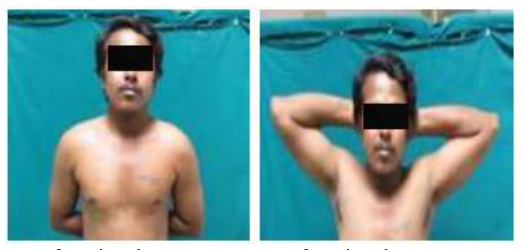
The average return to work in displaced middle third clavicular fractures treated by plate osteosynthesis is about 13 weeks and is comparable to Bhardwaj et al. [12], Kakkar et al. [7] and Prasobh [13] studies. The surgeon usually asks to wear the arm sling all the time for at least 4 to 6 weeks after the surgery. Gradually normal activities will be resumed, like walking; recovery is very gradual and takes weeks after the surgery [14]. Never use the operated arm to lift anything heavier than 1 lb (a large coffee mug) (Figure 2).
Conclusions
The different options for the fixation of midshaft clavicle fractures are intramedullary nailing, pins, and plates. The complications with the former two implants are implant loosening, infections that require a long-term fixation period, and there is no resistance to torsional forces.
The advantages of using the plate are achieving good anatomical reduction, compression at the fracture site, and resistance to torsional forces. The recon plate is lightweight and thinner than D.C.P. and L.C.P. and can be contoured easily to the clavicle and fracture pattern. L.C.P.'s advantages are strong fixation due to locking between screws and plates, less stripping of periosteum, and preservation of blood supply. When L.C.P. is used, the force is transmitted from the bone through the threaded hole to the plate because the screw is locked to the plate's threaded hole. So, the L.C.P. plate need not be compressed to the bone for stability.
I n our study of 30 patients, we used a reconstruction plate in 20 patients, anatomical L.C.P. in 9 patients, and 1/3 tubular plate in 1 patient. All the fractures were united, and there was no reported case of nonunion, malunion, plate breakage, restriction of movements, neurovascular injury. In our study, one patient had an infection that was superficial and was treated with oral antibiotics. Four patients complained of hardware irritation. No implant removal was done during the period of study.
To conclude, open reduction with internal fixation of displaced midshaft clavicle fractures resulted in good union rates and excellent functional outcomes.
Institutional Review Board Statement
Any aspect of the work covered in this manuscript has been conducted with the ethical approval of all relevant bodies and that such approvals are acknowledged within the manuscript.
Conflicts of Interest
There are no known conflicts of interest in the publication of this article. The manuscript was read and approved by all authors.
References
- Postacchini F, Gumina S, De Santis P, Albo F. Epidemiology of clavicle fractures. J Shoulder Elbow Surg. 2002;11(5):452-6. doi: 10.1067/mse.2002.126613
- Rowe CR. An atlas of anatomy and treatment of midclavicular fractures. Clin Orthop Relat Res. 1968 May-Jun;58:29-42.
- Vrotsou K, Ávila M, Machón M, Mateo-Abad M, Pardo Y, Garin O, Zaror C, González N, Escobar A, Cuéllar R. Constant-Murley Score: systematic review and standardized evaluation in different shoulder pathologies. Qual Life Res. 2018 Sep;27(9):2217-2226. doi: 10.1007/s11136-018-1875-7
- Dedeoglu SS, Imren Y, Karslioglu B, Keskin A, Atar S, Bilsel K. Kinesiotaping therapy for midshaft clavicular fractures: a randomised trial study. Acta Orthop Belg. Mar;88(1):143-150. doi: 10.52628/88.1.18
- Nordqvist A, Petersson C. The incidence of fractures of the clavicle. Clin Orthop Relat Res. 1994 Mar; (300):127-32.
- Robinson CM. Fractures of the clavicle in the adult. Epidemiology and classification. J Bone Joint Surg Br. May;80(3):476-84. doi: 10.1302/0301- 620x.80b3.8079
- Kakkar RS, Mehta D, Sisodia A. Functional and radiological assessment of displaced midshaft clavicle fractures treated through open reduction and internal fixation surgery using pre-contoured locking compression plates. International Surgery Journal. 2020; 7(7):2261-7. doi: 10.18203/2349-2902.isj20202833
- Naveen BM, Joshi GR, Harikrishnan B. Management of mid-shaft clavicular fractures: comparison between non-operative treatment and plate fixation in 60 patients. Strategies Trauma Limb Reconstr. 2017 Apr; 12(1):11-18. doi: 10.1007/s11751-016-0272-4
- Mishra S, Panda D. Conservative management versus surgical management: A comparative study on displaced midshaft clavicular fractures in adults. International Journal of Orthopaedics Sciences. 2020;6(1):1171-5.
- Dhakad RK, Panwar M, Gupta S. Plating versus conservative treatment in mid shaft fractures of clavicle: A comparative study. J Clin Orthop Trauma. 2016; 7(Suppl 2):166-170. doi: 10.1016/j.jcot.2015.11.002
- Karthi MN, Premkumar TC, Kailash K. Prospective analysis of functional outcome of clavicle fractures treated by plate osteosynthesis. Journal of Evolution of Medical and Dental Sciences. 2018 Apr 9;7(15):1825- 8. doi: 10.14260/jemds/2018/412
- Bhardwaj A, Sharma G, Patil A, Rahate V. Comparison of plate osteosynthesis versus non-operative management for mid-shaft clavicle fractures-A prospective study. Injury. 2018 Jun;49(6):1104-1107. doi: 10.1016/j.injury.2018.04.012
- Prasobh C. A prospective study of functional outcome of displaced middle third clavicular fractures treated by plate osteosynthesis. (Doctoral dissertation, Governmenr Mohan Kumaramangalam Medical College, Salem). 2014:1-92. http://repository-tnmgrmu.ac.in/3028/1/220201014prasobh.pdf
- Karslioglu B, Tekin AC, Tekin E, Tasatan E. Ankle arthrodesis using computer assisted external fixator in patients with end-stage ankle arthrosis. J Clin Investig Surg. 2021;6(2):116-120. doi: 10.25083/2559.5555/6.2.5
